




I recently walked into a meeting with a customer team that should have been crushing it. Great product. Solid market position. Smart people.
But the energy in the room felt… wrong.
People spoke in carefully measured tones, watching their words like they were navigating a minefield. Ideas were presented tentatively, always with an escape route. Eye contact was strategic, not natural. This wasn’t a team collaborating. This was a group of people in survival mode.
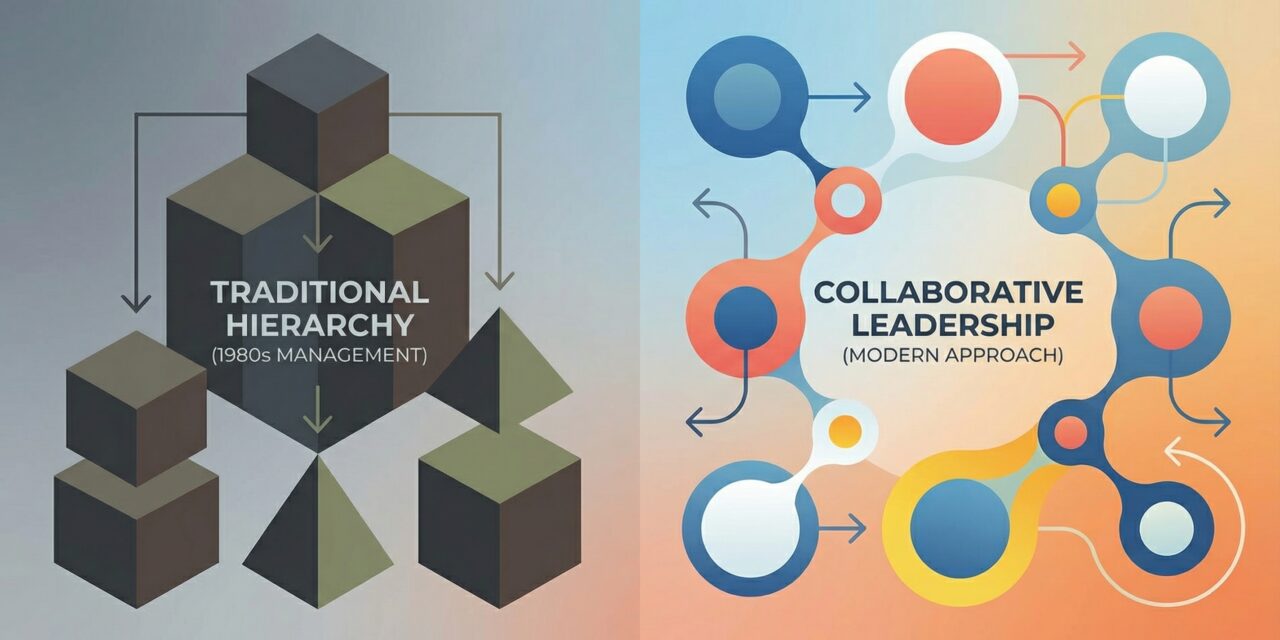
It didn’t take long to see why. The management style was straight out of 1985. Command and control. Power plays. The kind of leadership where your title matters more than your ideas, where challenging a decision equals insubordination, and where honest feedback goes to die somewhere in the hierarchy.
Here’s what troubles me most: We’re in 2026, and I’m still watching brilliant people dim their own light because they’ve learned that speaking up means getting burned.
This Isn’t an Isolated Case
Working at ServiceNow gives me a front-row seat to how different organizations operate. Not just internally, but through customers across Spain, the US, Canada, Greece, Germany, Switzerland, and beyond. I get to see what high-performing cultures look like and, unfortunately, what toxic ones look like too.
Let me be crystal clear: This article isn’t about ServiceNow. It’s about a pattern I keep seeing in some customer environments. Leadership habits that should have been retired decades ago and the organizational cultures that keep them alive.
And I’m writing about it because the upside of fixing this is enormous. When leaders modernize the way they lead (more human, more honest, more accountable), companies don’t just feel better. They perform better.
Toxic Management Doesn’t Start with Fireworks
Toxic cultures rarely announce themselves. They build up through small, repeatable moments that become patterns that become systems:
- The first time someone is humiliated in a meeting and the room stays silent
- The first time a leader takes credit for the team’s work and people shrug it off
- The first time someone raises a concern and gets labeled “difficult” or “not a team player”
- The first time integrity becomes negotiable because the numbers look good
One incident might be a bad day. A pattern becomes your culture.
And when the pattern becomes the system, people adjust. They stop taking risks. They stop challenging weak decisions early. They stop bringing bad news quickly. They stop sharing ideas before they’re “managed.” They become professional survivors instead of professional builders.
That’s when the culture shifts from creating value to protecting territory.
The Subtle Poison: “Dishonest Caring”
The most damaging leaders aren’t always the loud, aggressive ones. Some don’t shout. They smile. They use all the right words about caring and support.
And then they weaponize them.
They ask how you’re doing… and use your answer as leverage later. They say “I’ve got your back” right up until the moment you disagree or set a boundary. They preach transparency while operating in shadows.
I call this “dishonest caring.” It looks warm on the surface but it’s purely transactional underneath:
- “I support you” (until you challenge me)
- “Speak up” (until you actually do)
- “We’re a family” (until you ask for fairness)
People aren’t stupid. They feel the mismatch between words and actions. And once employees stop believing what leaders say, culture becomes theater. Everyone learns their lines, nobody trusts the plot, and the organization starts operating on caution instead of conviction.
I’ve watched this play out across different cultures and countries. The specifics vary (what’s considered “direct feedback” in Germany versus the US, how hierarchy operates in Mediterranean versus Nordic cultures) but the core dynamic of dishonest caring is universally corrosive.
The Cultural Tolerance Problem
Here’s the uncomfortable truth: toxic management doesn’t survive because of one bad leader. It survives because culture tolerates it, normalizes it, and quietly teaches everyone else to adapt.
Sometimes it’s generational. “That’s how we’ve always done it.” Sometimes it’s results-oriented. “They hit their numbers, so we overlook their management style.” Sometimes it’s cultural. Certain environments still operate with outdated “old boys’ club” dynamics where some voices (often women’s) are routinely minimized.
When that happens, diversity becomes a checkbox, inclusion becomes a slogan, and the room might look modern while the power structure stays stuck in the past.
Culture Is What You Tolerate, Not What You Publish
Most companies have beautiful values on their websites: respect, integrity, inclusion, collaboration.
But values aren’t posters. Values are enforcement.
Culture is what gets rewarded. Culture is what gets promoted. Culture is what gets protected when someone complains.
So here’s the truth that makes people uncomfortable: If someone consistently mistreats people but delivers “results,” and nothing happens to them, you’ve just written the playbook for everyone else. You’ve told your entire organization what actually matters.
What Modern Leadership Actually Looks Like
For leaders who genuinely want to do better (and I believe most do, they just don’t always know how), here’s what effective leadership looks like in 2026:
Authenticity over performance. Great leaders don’t pretend to have all the answers. They’re comfortable saying “I don’t know” and “I made a mistake.” They show up as real people, not carefully curated corporate personas.
Empowerment over control. Instead of micromanaging every decision, modern leaders create frameworks for good decision-making and then trust their teams to execute. They delegate authority along with responsibility.
Clarity with humanity. Respectful leadership isn’t soft. It’s efficient. When people feel safe and respected, they tell you the truth faster. They raise risks earlier. They challenge weak ideas before they become expensive mistakes. Healthy leadership isn’t about avoiding hard conversations; it’s about having them without humiliation, manipulation, or theater.
Authentic connections over transactions. The best leaders build relationships that endure beyond quarterly targets and annual reviews. They invest in people, not just extract value from them.
A Quick Mirror Check (For Anyone Leading People)
If you manage people (formally or informally), this is worth five minutes of honest reflection:
- When was the last time someone disagreed with me openly?
- Do people bring me problems early, or only when things are already on fire?
- Do I reward honesty even when it’s uncomfortable?
- Do I interrupt some people more than others?
- Do I treat feedback as a threat or as useful data?
If you don’t love the answers, that’s not a failure. That’s the starting point. Self-awareness is where leadership upgrades begin.
What Organizations Can Actually Do
If you want to fix toxic culture, skip the generic workshops and glossy “culture initiatives.” Those can help, but only after the basics are non-negotiable:
Make values measurable. Respectful behavior has to show up in performance reviews, leadership evaluations, and promotion criteria. If repeated disrespect doesn’t affect someone’s career trajectory, your values are optional.
Stop rewarding toxic results. A leader who hits numbers while burning people isn’t a high performer. They’re a liability with a spreadsheet. If you reward the outcome while ignoring the method, you’ll get more of the method.
Build real feedback loops. Use pulse checks, 360 reviews, and anonymous feedback. Then do something visible with what you learn. Nothing kills trust faster than asking for honesty and doing nothing with it.
Train managers like you train engineers. Most people become managers because they were good at their job. That doesn’t automatically make them good at leading humans. Leadership is a skill (communication, coaching, conflict handling, decision transparency, bias awareness). Treat it like a discipline, not just a title.
If You’re Living This Right Now
A quick note for people dealing with this in real time:
- Document patterns (facts, dates, behaviors; keep it factual)
- Find allies (you’re rarely alone, even if it feels like it)
- Use formal channels if they exist and are trustworthy
- Set boundaries (your mental health isn’t a KPI)
And if the culture keeps protecting the behavior? Consider whether you’re willing to spend your career energy surviving a workplace instead of thriving in one.
Not because you “lost,” but because you deserve better.
The Path Forward
We spend the majority of our waking hours at work. The quality of our leadership directly impacts the quality of our lives.
The excuse that “this is just how things are done here” is no longer acceptable. Every day an organization tolerates disrespect, dishonesty, and power games, it’s choosing the culture it wants. And every day a leader chooses clarity, accountability, and empathy over theater and control, they’re building a culture people actually want to be part of.
Toxic management isn’t a personality problem. It’s a cultural decision.
The good news? Leadership is learnable. Culture is changeable. Organizations can transform when they commit to it. But it starts with honest conversations about what’s broken and genuine commitment to fixing it.
Final Thought
So I’ll leave you with a simple question: What kind of culture are you reinforcing today?
Not the one on your website. Not the one in your mission statement. The one you’re actually creating through the behaviors you tolerate, the leaders you promote, and the standards you enforce when nobody’s watching.
If this resonates, I’d love to hear your perspective:
- Have you seen “80s management” still alive and well in 2026?
- What helped change it in your organization?
- What didn’t work?
Let’s make some positive noise about this. Because the companies that figure this out won’t just have better cultures. They’ll have better business outcomes, stronger teams, and talent that actually wants to stay.
#Leadership #CompanyCulture #ModernLeadership #PsychologicalSafety #AuthenticLeadership #WorkplaceCulture #ManagementEvolution #PeopleFirst
This article was also published on my LinkedIn profile.